
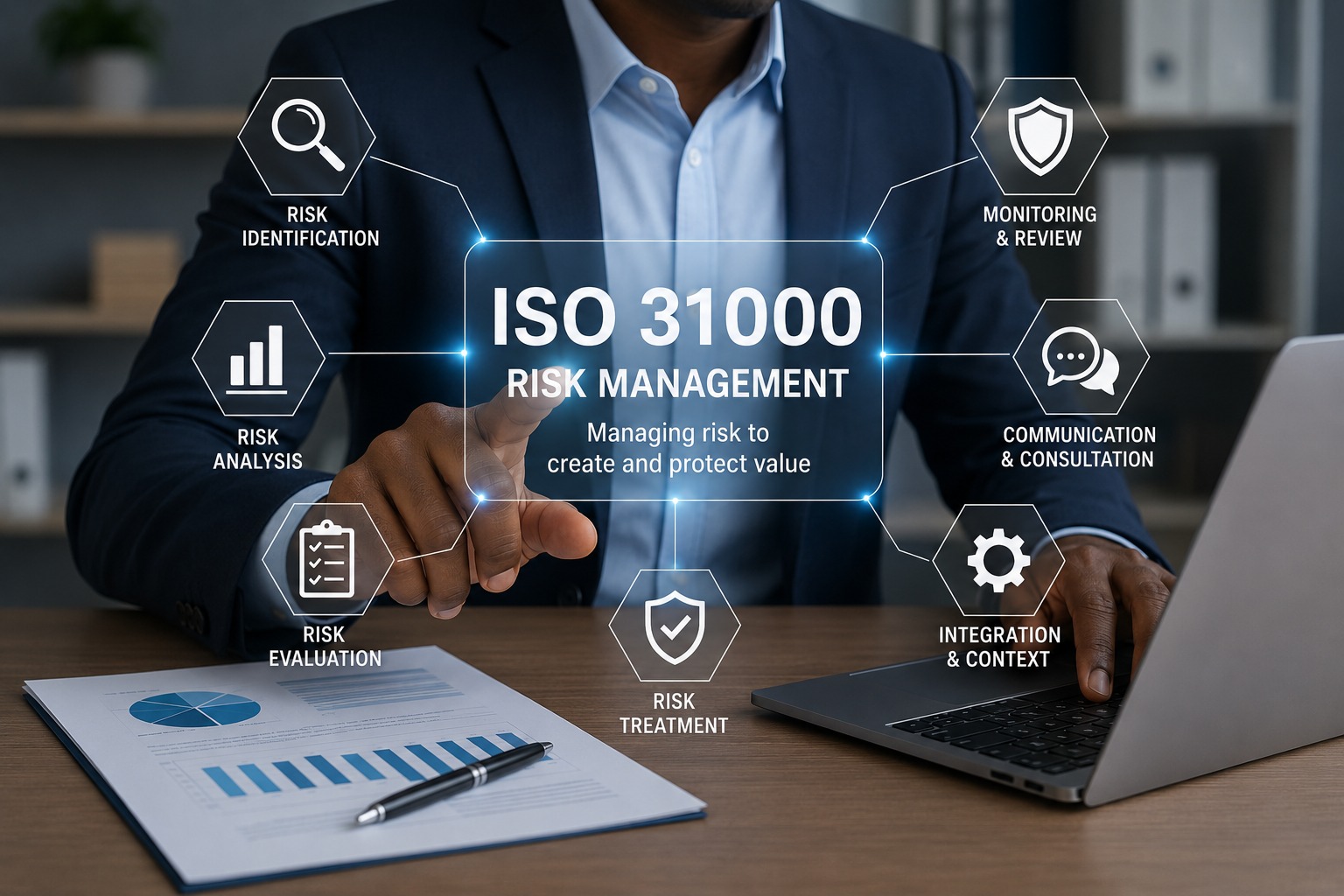
ISO 31000 Risk Management Risk Manager Training Course – Self-Study (Cognicert)

Wishlist Share

About Course

The ISO 31000 Risk Management Risk Manager Self-Study Course – Cognicert Certified is a flexible, self-paced programme designed to equip participants with the knowledge and competencies required to understand, design, and implement an effective risk management framework based on ISO 31000 guidelines.

This course is ideal for professionals who prefer independent learning while developing strong foundations in risk management principles, risk assessment techniques, and risk-based decision-making.

Learners are guided through structured study materials, practical examples, and case studies that demonstrate how to identify, analyze, evaluate, and treat risks within organizational environments. The course also supports understanding of how risk management integrates with governance, strategy, and operational processes.

Show More

What Will You Learn?

  • Understand ISO 31000 risk management principles and framework.
  • Identify and assess organizational risks effectively.
  • Develop risk treatment and mitigation strategies.
  • Integrate risk management into governance and operations.
  • Monitor and improve risk management processes.
  • Apply risk-based thinking in decision-making.
  • Strengthen organizational resilience and performance.
  • Build competence as a risk management professional.
  • Prepare for Cognicert certification in risk management.
  • Apply theoretical knowledge in practical scenarios.

Course Content

Introduction to Risk Management
Fundamentals of risk management Key concepts and definitions Principles of ISO 31000 Importance of risk-based thinking

ISO 31000 Framework Overview
Structure of ISO 31000 guidelines Risk management principles Leadership and governance roles Organizational context and culture

Risk Identification
Methods of identifying risks Internal and external risk factors Strategic, operational, and financial risks Risk registers and documentation

Risk Analysis and Evaluation
Qualitative and quantitative risk analysis Likelihood and impact assessment Risk prioritization techniques Decision-making criteria

Risk Treatment Strategies
Risk avoidance, reduction, transfer, and acceptance Development of risk treatment plans Control selection and implementation Cost-benefit considerations

Risk Monitoring and Review
Monitoring risk performance indicators Updating and reviewing risk registers Continuous improvement of risk processes Assurance and audit support

Risk Communication
Stakeholder communication Risk reporting structures Documentation and transparency Supporting decisions through risk information

Integration of Risk Management
Embedding risk into organizational processes Alignment with ISO management systems Governance and compliance integration Strategic alignment

Crisis and Opportunity Management
Understanding positive and negative risks Crisis preparedness and response Opportunity identification and management Building organizational resilience

Role of the Risk Manager
Responsibilities of a risk manager Ethical considerations Leadership in risk management Practical case studies and application

Student Ratings & Reviews

No Review Yet
No Review Yet